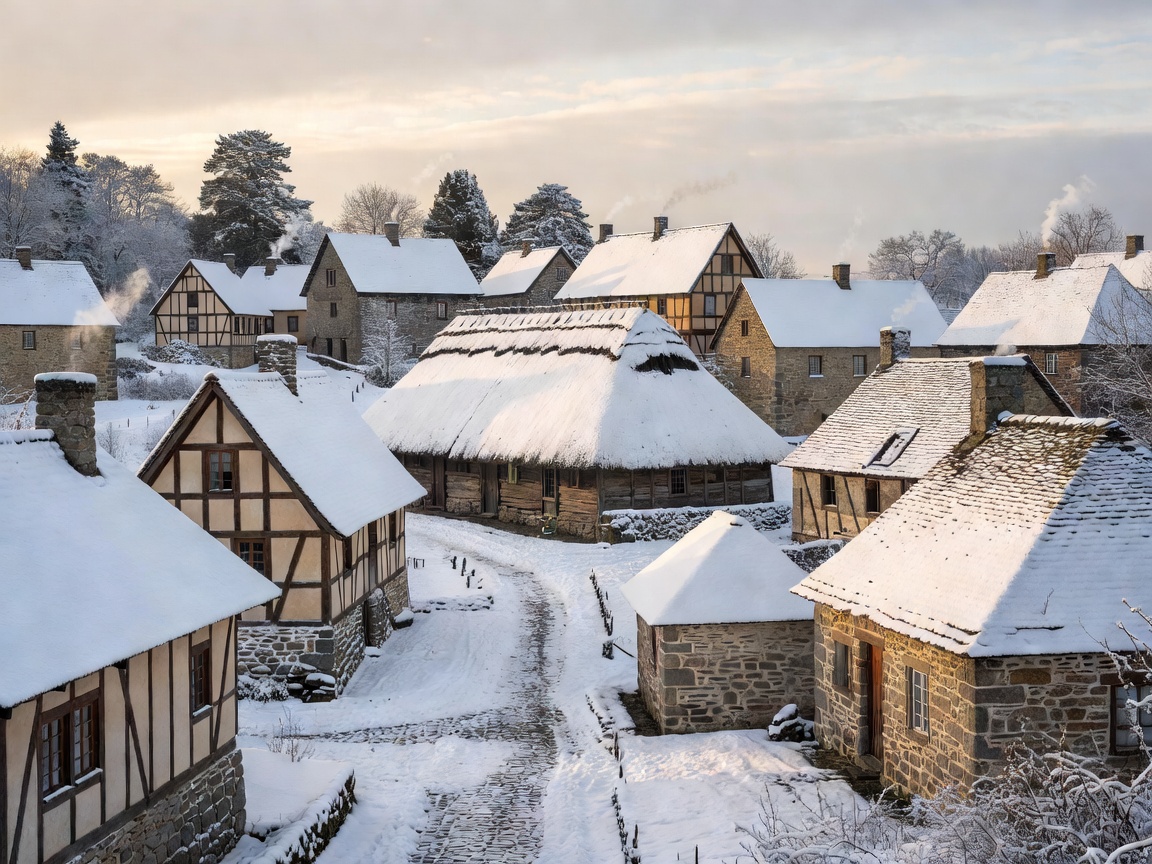
Alpine Europe
Mountain settings can place a village between steep slopes, timber buildings and stone structures. Winter weather may affect road access, walking surfaces and visibility. Seasonal lighting often works with the existing roofline and compact street pattern.
Check elevation, transfer time and the final walk from transport. Snow is possible but never guaranteed. A village setting can be quieter than a city market, but services may be less frequent.
Central Europe
Historic squares and old-town streets often provide the main framework. Market traditions may sit beside contemporary food cabins, craft stalls and programmed entertainment. Look at the full town plan rather than one decorated square.
Northern Europe
Shorter daylight makes lighting an important part of the visit. Outdoor activities may be paired with indoor seasonal spaces. Cold, wind and changing surfaces make footwear and route planning important.
Western Europe
City markets often occupy historic districts, civic plazas or several connected locations. Regional food traditions can shape the offer. Public transport may simplify access, while the total route can be longer than expected.
Southern Europe
Milder winter conditions can support more outdoor public-space activity, but weather remains variable. Decoration may extend through streets, civic buildings and food areas. Check local opening patterns rather than assuming a northern market model.
Eastern Europe
Historic centres, craft culture and regional food traditions may shape seasonal markets. Formats differ widely between cities and smaller towns. Review current access, language information and payment arrangements before departure.
Good for
Travellers choosing between architecture, mountain setting, daylight, food, transport or a compact old-town route.
What to know
National borders do not perfectly map Christmas customs. A region contains different climates, languages and event formats. Use destination-level sources for current dates, access and local rules.