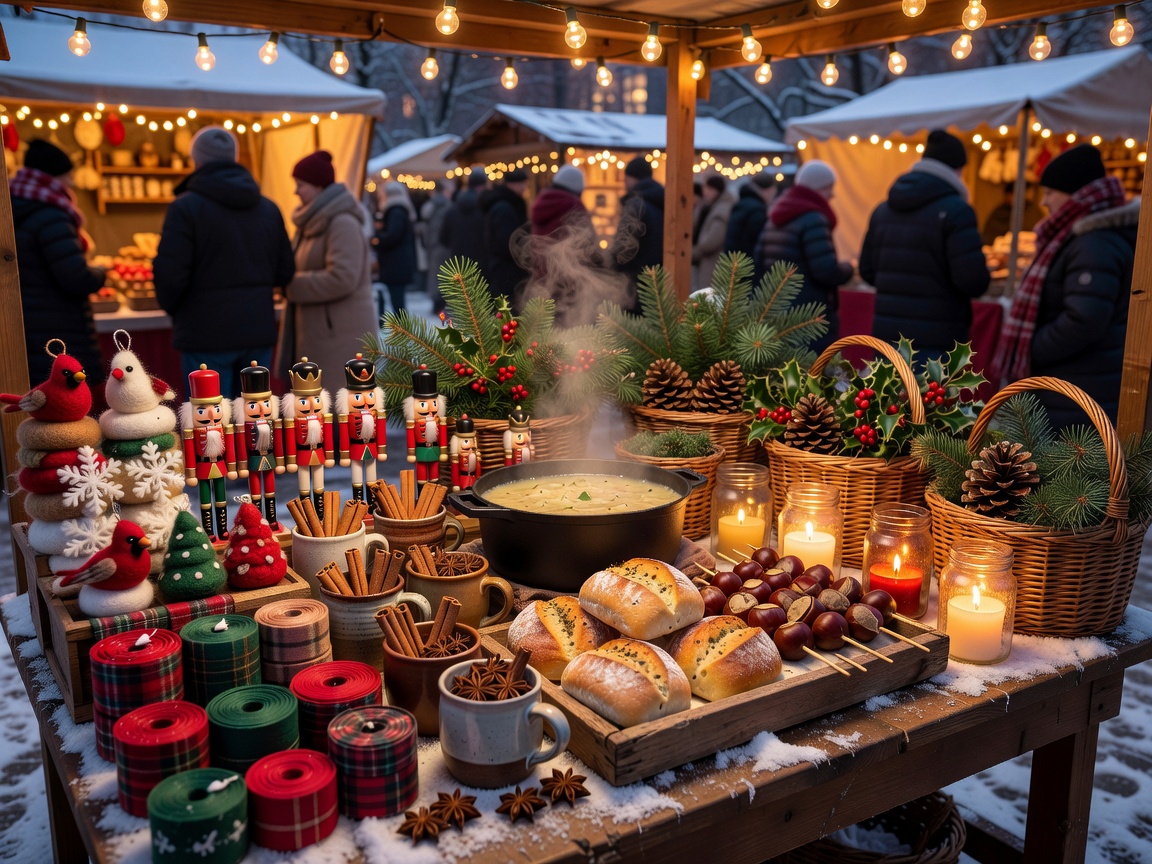
Food and drink
Common market categories include baked goods, savoury snacks, seasonal sweets and hot non-alcoholic drinks. Recipes and names vary by region. Ask about ingredients, allergens and preparation when information is unclear.
Food is often the easiest way to notice regional difference, but a stall’s presence does not prove that a dish is historic or local. Read vendor descriptions and local cultural sources.
Objects and making
Ornaments, textiles, woodwork and ceramics may be sold as gifts or demonstrations. Handmade claims deserve careful reading. Some markets mix local makers with imported seasonal stock.
- Check material and care information.
- Ask whether an item is made locally.
- Pack fragile ceramics separately.
- Carry reusable packaging where practical.
Music and public celebration
Music can be religious, civic, commercial or family-oriented. A concert, procession or workshop may be part of a current programme rather than a long-standing custom. Confirm the source, date and access rules.
Tradition and adaptation
Historical traditions develop over time. Contemporary markets also adapt them for visitors, retail and public programming. Both can be meaningful. They should not be presented as identical.
Family activities may include craft workshops, storytelling, seasonal displays or outdoor play. Check age guidance, booking requirements and weather alternatives. Religious settings may have their own etiquette and schedules.
Good for
Visitors who plan around food, craft, music, family activities or cultural context rather than a single photograph.
What to know
Do not assume one national format. Traditions can vary by town, language community, faith practice and generation. Use museums, local cultural institutions and current official event information for deeper verification.